Analytics, reports and recommendations for Central Asia.
Background Note on the Civil Society Working Group on Sustainable Development in Central Asia According to the Freedom in the World Index by Freedom House, all five Central Asian states are classified as not free, with consolidated authoritarian regimes. The countries of the former Soviet region (Kazakhstan, Kyrgyzstan, Tajikistan, Turkmenistan, and Uzbekistan) have followed different paths since gaining independence in 1991; however, all of them demonstrate systematic human rights violations and persecution of human rights defenders. Political rights and civil liberties, including freedoms of expression, assembly, and association, are restricted to varying degrees across the region. Corruption, arbitrary detention, and ill-treatment in places of detention are widespread. The work of independent human rights defenders and civil society organizations (CSOs) is significantly constrained. There are no independent human rights organizations in Turkmenistan; only a limited number operate in Uzbekistan; and in Tajikistan they face increasing pressure. In Kazakhstan and Kyrgyzstan, CSOs are formally allowed to operate, but they are still subject to arbitrary interference, politically motivated charges, and stigmatization, including through labels such as “foreign agents” or “foreign representatives.” Against this backdrop, the effectiveness of traditional international human rights mechanisms remains limited. For many years, UN treaty bodies and Special Procedures have issued concluding observations and recommendations to Central Asian states, yet implementation—particularly regarding political rights and civil liberties—remains крайне низким. UN treaty bodies have issued more than 150 decisions on individual complaints against Central Asian states (including more than 70 concerning Kazakhstan), but these are largely not implemented, both in terms of remedies and compensation, let alone systemic changes. A similar situation exists with regard to recommendations from international election observation missions, including those of the OSCE. Meanwhile, civic space in the region continues to shrink, and pressure on human rights defenders, activists, and independent organizations is increasing. In this context, alternative avenues of influence are becoming increasingly important, particularly through international institutions that do not primarily focus on human rights but are increasingly incorporating such considerations into their work. These include international financial institutions (such as the World Bank, the European Bank for Reconstruction and Development, and the Asian Development Bank), as well as organizations working in the fields of security, development, and anti-corruption (including FATF, UN counter-terrorism bodies, the OECD, EITI, and others). Countries in the region actively engage with these institutions to support economic development and cooperation in the field of security. In recent years, the standards and procedures of these institutions have increasingly incorporated human rights requirements and safeguards for civic space. This is also reflected in assessment missions and consultations with civil society, creating additional opportunities for effective advocacy. In this context, the Civil Society Working Group on Sustainable Development in Central Asia operates with the participation of the Kazakhstan International Bureau for Human Rights and Rule of Law (KIBHR). The main objective of the Working Group is to strengthen the capacity of human rights defenders and civil society actors in the region to protect socio-economic, environmental, and fundamental human rights in the context of economic transformation (including infrastructure projects and extractive industries), as well as to promote human rights considerations within international financial institutions and other international organizations. The activities of the Working Group include: – analyzing standards, procedures, and requirements of international financial institutions and other international organizations related to human rights and civil society;– examining the legal and institutional frameworks governing the interaction between Central Asian states and international financial institutions and organizations in the fields of development and security;– developing advocacy strategies aimed at ensuring respect for human rights and expanding civic space;– facilitating exchange of experience and coordination among human rights defenders and civil society organizations in the region;– preparing analytical materials and recommendations;– organizing expert consultations and discussions involving regional stakeholders. The Working Group brings together experts, human rights defenders, and civil society representatives from across Central Asia and contributes to strengthening regional cooperation, enhancing advocacy capacity, and improving the use of international institutional mechanisms for the protection of human rights. List of members of the working group
Organizations CEE Bankwatch Network Kazakhstan Public Association "Echo" Kazakhstan Legal Policy Research Centre Kazakhstan Public Foundation "Civic Expertise" Kazakhstan MISK Kazakhstan Public Foundation "Parliamentarism Development Fund" Kazakhstan Legal Media Center Kazakhstan International Center for Journalism "MediaNet" Kyrgyzstan Bir Duino Kyrgyzstan Kyrgyzstan Public Foundation "Civics" Kyrgyzstan Legal Clinic "Adilet" Uzbekistan Center for the Development of Modern Journalism Turkmenistan Turkmen Initiative for Human Rights Turkmenistan Turkmen Helsinki Foundation Experts Aida Dzhumanazarova (Kyrgyzstan) Aigul Kaptayeva (Kazakhstan) Tatyana Sedova (Kazakhstan)
on the standards, rules, and procedures of international financial institutions (the World Bank, the European Bank for Reconstruction and Development, and the Asian Development Bank), organizations promoting cooperation in the areas of security, transparency, and economic development (the Financial Action Task Force, the Extractive Industries Transparency Initiative, and the Organization for Economic Cooperation and Development), mechanisms for civil society participation in decision-making processes, and the legal frameworks and obligations of Central Asian states (Kazakhstan and Kyrgyzstan) towards these institutions in the context of human rights compliance and engagement with civil society. Download in EnglishСкачать на русском языкеҚазақ тілінде жүктеуКыргыз тилинде жүктөп алууБа забони тоҷикӣ зеркашӣ кунедTürkmen dilinde ýükläp almakЎзбек тилида юклаб олиш
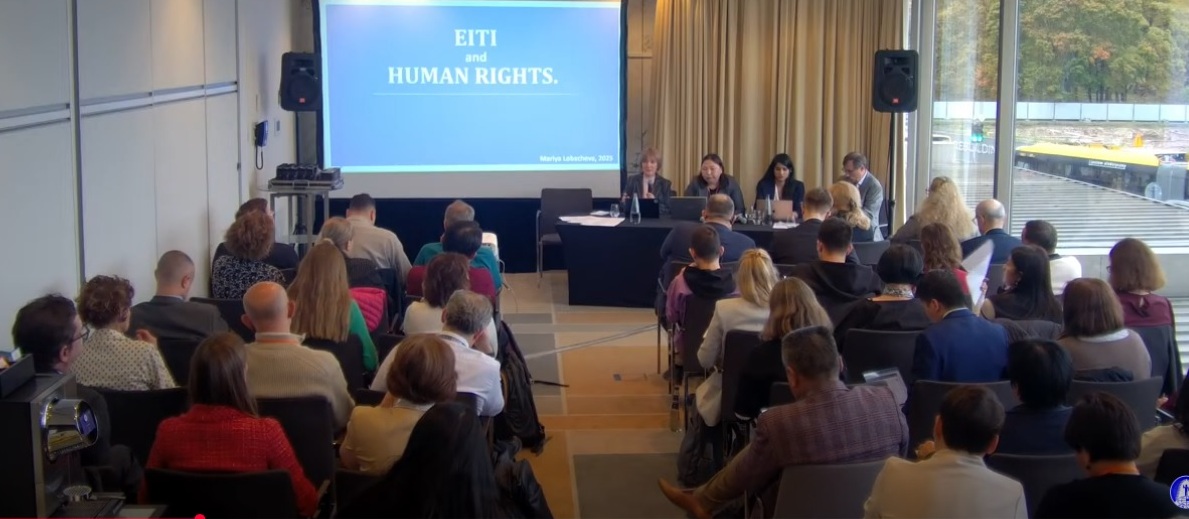
At the international conference on the human dimension, Kazakhstani human rights defenders held a separate event (side event), where they highlighted the issue of cooperation with international organizations and financial institutions to promote human rights and civil society in order to promote the sustainable development of Central Asian countries.